In Nichiren Buddhism, faith means trust in the possibility that your life can change, and the decision to act on that trust. It is not belief in a deity or acceptance of a list of claims. The Japanese term, shinjin, joins the words for trust and mind.
Faith is not credulity
Faith is often confused with believing things you cannot question. That is not what the writings describe.
Nichiren's letters are addressed to people with doubts, questions and difficult circumstances. He argues with them, encourages them and answers their objections. Doubt is not the opposite of faith; pretending to be certain might be.
You do not have to feel convinced before you sit down to chant. You only have to be willing to try, and to keep trying long enough to see what happens.
What faith looks like in a week
Faith is mostly ordinary. It looks like getting up ten minutes earlier. It looks like chanting on a morning when you feel nothing, then making breakfast.
It looks like telling the truth when a lie would be easier, or staying in a difficult conversation instead of leaving. These small acts are where trust becomes visible.
Many practitioners describe faith as a direction rather than a feeling. On some days it is warm and obvious. On others it is a decision you make with your feet.
Faith, practice and study
The tradition often describes three supports: faith, practice and study.
Faith is the trust that makes you begin. Practice is the chanting and the daily behaviour that carries it. Study is the reading and reflection that keeps it clear.
The three are meant to correct each other. Practice without faith becomes mechanical. Faith without study becomes vague. Study without practice becomes talk.
You do not need to balance them perfectly. When one is weak, lean on the others for a while.
When faith wobbles
It will wobble. A prayer that seems unanswered, a long illness, a loss that makes the whole thing feel pointless: these are common.
In those periods, reduce the practice rather than abandoning it. One recitation is enough to keep the connection. Tell someone you trust. Read a short letter rather than a long treatise.
And remember that faith is not a test you can fail. The fact that you are still asking the question is itself a form of engagement.
Try this today. Write one sentence beginning "I am willing to..." about something you would like to change. Chant for five minutes with that sentence in mind.
From Nichiren's writings. In The Heritage of the Ultimate Law of Life, Nichiren teaches that the heritage of the Law is received through faith rather than through status, learning or lineage. The letter makes the practice available to anyone willing to take it up.
Next step
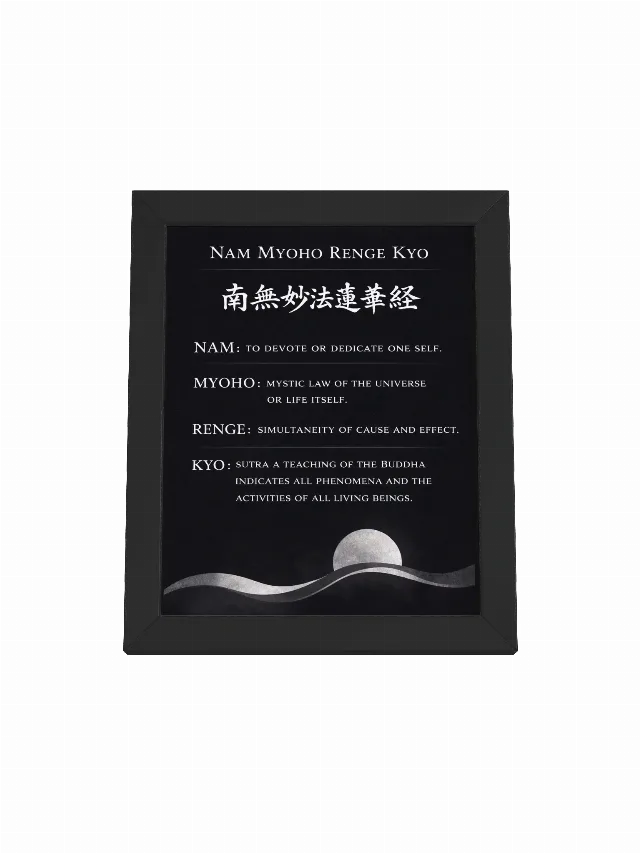
Faith, Practice and Study explains how the three work together. What Do I Do When I Doubt My Practice? is for the wobbling weeks. Nam Myoho Renge Kyo Meaning unpacks the phrase that faith turns towards.
If you are willing to begin, the chant timer will keep five minutes for you.