The Latter Day of the Law is a traditional way of describing a long era after the Buddha's death in which the teaching remains but people find it hard to practise and society is troubled. Nichiren believed he lived in that age and shaped his teaching for it. The point was not doom, but a practice suited to the time.
The three periods
Buddhist tradition often divides the time after a Buddha's death into three periods. In the first, the teaching is understood and practised widely. In the second, it is practised in form but understood less. In the third, the teaching survives but few people can make it work for them.
The Japanese term for the third is mappo, the Latter Day of the Law. The scheme is a way of thinking about decline, not a prophecy with a date attached.
Nichiren lived in a period of famines, earthquakes and warfare, and the idea that the age was troubled did not seem abstract to him.
Why Nichiren took it seriously
Nichiren argued that the practices designed for earlier ages no longer fitted the people of his time, and that the teaching needed to be made accessible to ordinary people. Elaborate rituals and long monastic training were beyond most people, whatever their devotion.
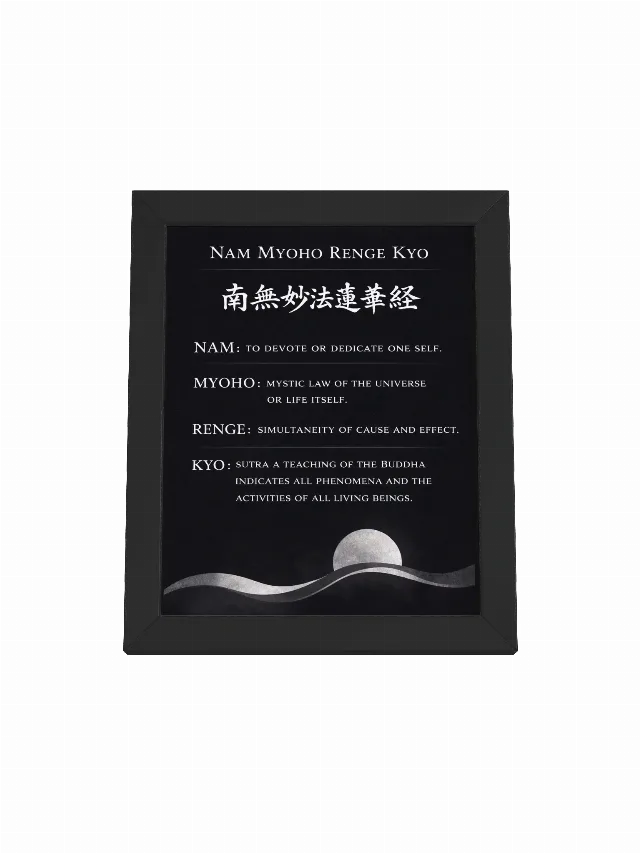
His response was not to mourn the age but to offer a practice simple enough for anyone: chanting Nam Myoho Renge Kyo, with faith in the Lotus Sutra.
The Latter Day is therefore the reason for the simplicity, not an excuse for despair. The worse the conditions, the more accessible the practice needs to be.
What it means now
Many practitioners today do not read news headlines as signs of the end. The idea is more useful as a diagnosis of a particular kind of difficulty: distraction, division, and a sense that the old institutions no longer hold.
That diagnosis is familiar. It describes a Tuesday as much as a century.
The teaching also refuses the idea that things must get worse before they can get better. Nichiren's writings are full of the opposite expectation: that ordinary people, practising now, can change the direction of their lives and the place they live in.
A caution
Some people use "latter day" to justify pessimism about the world, or to claim that only a small group understands the truth. Nichiren's own response to a troubled age was to practise and to speak plainly, not to withdraw.
Communities also differ in how much weight they give to the scheme. Some teach it in detail; others mention it mainly as background. What stays consistent is the instruction to practise in the time you actually have.
Try this today. Choose one piece of news that troubled you this week. Chant Nam Myoho Renge Kyo for five minutes, then do one small useful thing you can actually do.
From Nichiren's writings. In On Establishing the Correct Teaching for the Peace of the Land, Nichiren surveys the disasters of his time and argues that the root problem is a failure to uphold the correct teaching. The treatise is less interested in predicting ruin than in naming a cause and a remedy.
Next step
The Latter Day of the Law explains the three periods in more depth. Why Nichiren Wrote On Establishing the Correct Teaching sets the treatise in context. Who Was Nichiren Daishonin? gives the life behind the ideas.
To practise in this age, however you name it, the chant timer is a place to start.