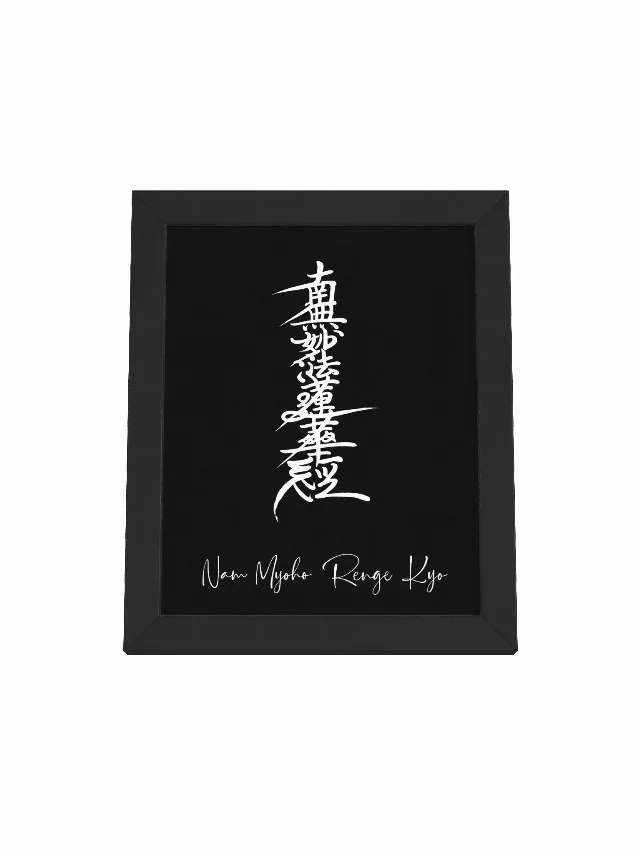
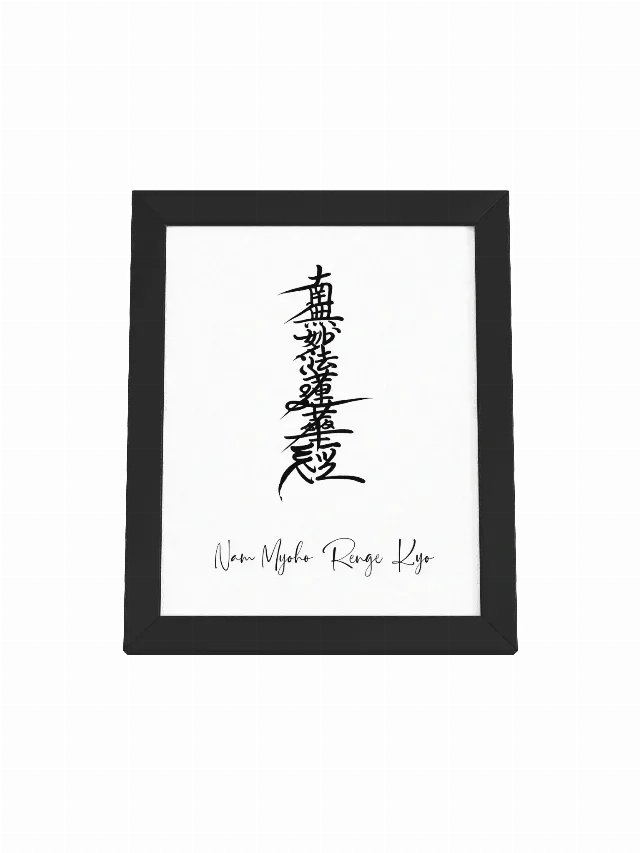
It shares the basic Buddhist framework and then makes a specific choice. The Lotus Sutra is treated as the complete teaching, and its title is chanted as the main practice. Where many forms of Buddhism emphasise meditation or ethical discipline, this one centres on reciting Nam Myoho Renge Kyo.
The foundation is common ground. Buddhism begins with the observation that life contains suffering, that suffering has causes, that it can end, and that there is a path to its ending. Those are the Four Noble Truths.
The path is usually described as eightfold: right understanding, intention, speech, action, livelihood, effort, mindfulness and concentration. The list is a framework for living, not a set of commands.
Buddhism also generally teaches impermanence, the fact that things change, cause and effect, and the absence of a fixed, separate self. Nichiren Buddhism does not reject any of that. It reads those teachings through the Lotus Sutra, which it treats as their fullest expression.
Where the emphasis differs
The most visible difference is the practice. Many Buddhist traditions centre on seated meditation, chanting in Pali or Tibetan, or devotional rites. Nichiren practice centres on the title of the Lotus Sutra, chanted as daimoku.
Nichiren also placed his teaching in the Latter Day of the Law, a traditional idea of an age when the Buddha's teaching has been widely forgotten. He argued that in such an age the title was the practice suited to ordinary people, rather than long retreats or monastic training.
Another difference is the object of devotion. Many traditions use images, relics or mandalas, sacred diagrams of the teaching. This one uses a scroll called a gohonzon, understood as a representation of the teaching rather than a god.
Finally, there is an emphasis on benefit in this life: work, family, health and money are not distractions from the practice. They are the material of it.
How to describe this without ranking
Nichiren argued his case forcefully in a particular time and place, against particular rivals. That is history. It is not a licence for anyone today to look down on another tradition.
Other forms of Buddhism have helped many people live with more kindness and less fear. This site does not rank them, and it does not claim a superior Buddhism. It simply explains one practice and lets you decide whether it helps.
If you meet a teacher or a group that encourages contempt for other traditions, treat that as a warning sign rather than a mark of seriousness.
If you come from another Buddhist tradition
You do not have to abandon what you already do. Some people keep a meditation practice alongside chanting. Others find that one practice is enough and let the other fall away naturally.
Communities differ on how comfortable they are with mixed practice, so it is worth asking. What matters is honesty: if you are chanting while longing for something else, the longing will make itself known.
From Nichiren's writings. In On Establishing the Correct Teaching for the Peace of the Land, Nichiren stages a dialogue about the troubles of his society. He argues that they were rooted in confusion about the teaching, and that correcting that confusion would bring peace. It is a work of its time, and its argument is about understanding, not about conquest.
Try this today. Think of one teaching you already value, from any tradition, and ask how it shows up in your day. Chant for five minutes with that question in mind. Nothing you have learned elsewhere needs to be set aside.
Next step
The Lotus Sutra: A Guide to Its Teachings explains the text at the centre of the difference.
Why the Lotus Sutra Matters connects it to daily practice.
Why Did Nichiren Criticize Other Buddhist Schools in His Time? gives the historical context without turning it into a contest.
If you want to try the practice rather than compare traditions, the Curious Path is the place to begin.
If you would rather try it today, five minutes on the chant timer is the simplest start.