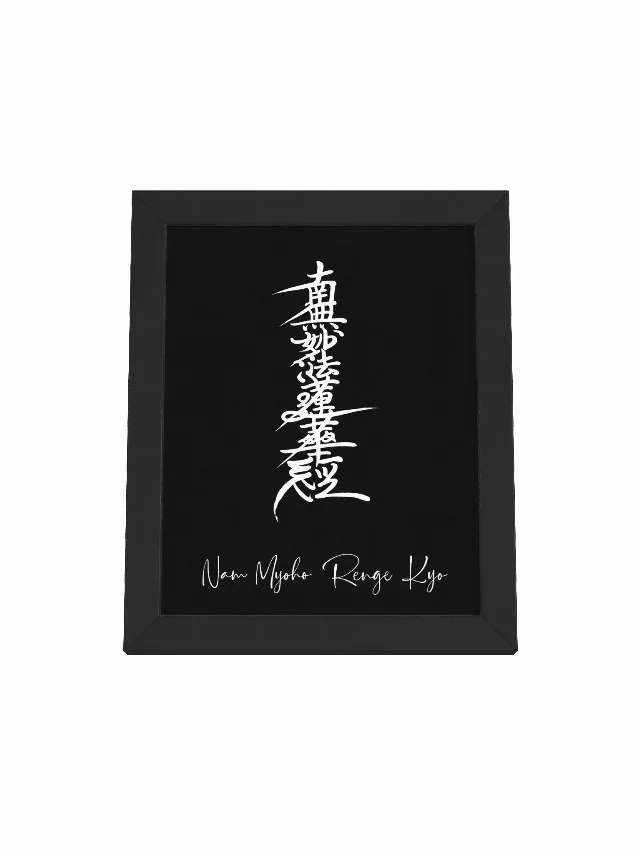
Newcomers often ask why this practice centres on one title rather than a longer prayer or a different phrase. The short answer is that Nichiren Buddhism builds its daily chanting around the Lotus Sutra, and the title Nam-myoho-renge-kyo is how that sutra is named in this practice.
What the title is made of
The phrase has four parts, each with a meaning practitioners study over many years.
- Nam is commonly read as devotion or dedication, the act of turning oneself toward something.
- Myoho refers to the Mystic Law, a term for the truth of life as it is taught in the Lotus Sutra.
- Renge means lotus. The lotus flower blooms from muddy water, which is often used as a picture of awakening in ordinary, difficult conditions.
- Kyo means sutra, or teaching.
Put together, the title expresses devotion to the teaching of the Lotus Sutra. That is the reason it is the focus of daily chanting here.
Why this teaching, and why this title
Nichiren taught that the Lotus Sutra expresses the potential of all people to become Buddhas, and he encouraged his followers to rely on it directly. This emphasis is central to the practice, and it explains why the chant points to the sutra by name.
Nichiren's own writings give many reasons for this focus, and different readers emphasise different ones. For a fuller picture, see the Gosho pages and the Lotus Sutra pillar.
Other traditions, other words
Many traditions use a chant, a prayer or a recitation as part of their devotion. Each has its own history and its own reasons for the words it uses. This page does not compare them or rank them. It simply explains why this practice uses this title.
If you practise with another community and find happiness, peace or a kinder way of living there, please continue. There is no harm in that, and any practice that helps a person become more honest and caring is good for them. Many people find that the question of which words to use matters less than whether the practice helps them live well.
Does the phrase have to be exact?
Practitioners usually chant the title in the form taught by their community, with its established pronunciation. You will also hear the form Nam-myoho-renge-kyo and its variants discussed. The How to Pronounce Nam-myoho-renge-kyo page covers the common pronunciation, and Nam or Namu explains that practice differs on this point.
Newcomers sometimes worry that a small difference in pronunciation will make their chanting less effective. Most practitioners find that sincere, steady chanting matters more than perfect sound. The exact form is usually learned gradually, with the guidance of the community you practise with.
Try this today. Say the title slowly, one part at a time: Nam, Myoho, Renge, Kyo. Pause between each one, and notice what each word brings to mind for you.
Next steps
What Does Nam-myoho-renge-kyo Mean? goes deeper into each part of the title. Do the Words Nam-myoho-renge-kyo Have Power of Their Own? looks at whether the sound itself carries force.