Karma means action. It is what you do, say and think, together with the pattern those actions leave behind. In this practice karma is not a punishment or a fixed fate. Chanting does not erase your past. It changes the person who meets it, and a changed person makes different causes.
Karma is action, not a ledger
The word karma comes from Sanskrit and simply means action. Karma in Nichiren Buddhism is not a file kept by a judge in the sky. It is closer to the way a habit works: repeat something often enough and it becomes easier to repeat, harder to see, and likelier to shape what happens next. Karma is the whole pattern of cause and effect that runs through a life.
That pattern is real. If you speak sharply to people for years, you will build a reputation and a set of responses that meet you everywhere. If you practise patience in small things, patience becomes more available under pressure. Neither outcome is a reward or a punishment. Both are the natural fruit of repeated causes.
The important part is the tense. Karma is not only something you inherit. It is something you are making now, in this conversation, in this hour.
Three doors: thought, speech and deed
Buddhist teaching describes three doors through which karma is made: the mind, the mouth and the body. Karma in Nichiren Buddhism keeps all three in view, which is why the practice is not just about behaviour.
Take a common scene. A colleague gets the promotion you wanted. The first thought is, "She does not deserve it." That is the door of the mind. You mention it at lunch, with a small laugh. That is the door of speech. For the rest of the week you are cool with her in meetings. That is the door of the body.
Nothing dramatic has happened. No one has been harmed in a way that would show up in a report. But a pattern has been fed. Next month the same thought will arrive faster, and the coolness will feel more like a fact about her than a choice you made.
The reverse is also true. One honest thought, held long enough to change a sentence, can alter the tone of a whole team.
What chanting changes, and what it does not
Chanting does not cancel consequences. If you have hurt someone, the hurt is still there, and repair may still be needed. The practice is not a way to skip the difficult phone call.
What chanting changes is the cause you make from now. You cannot unwrite the past. You can change the next sentence. You can interrupt a pattern before it completes itself for the hundredth time.
Many practitioners describe the change as a widening of the gap between trigger and response. Something provokes you, and instead of being inside the reaction immediately, you find a small space. In that space, a different action becomes possible.
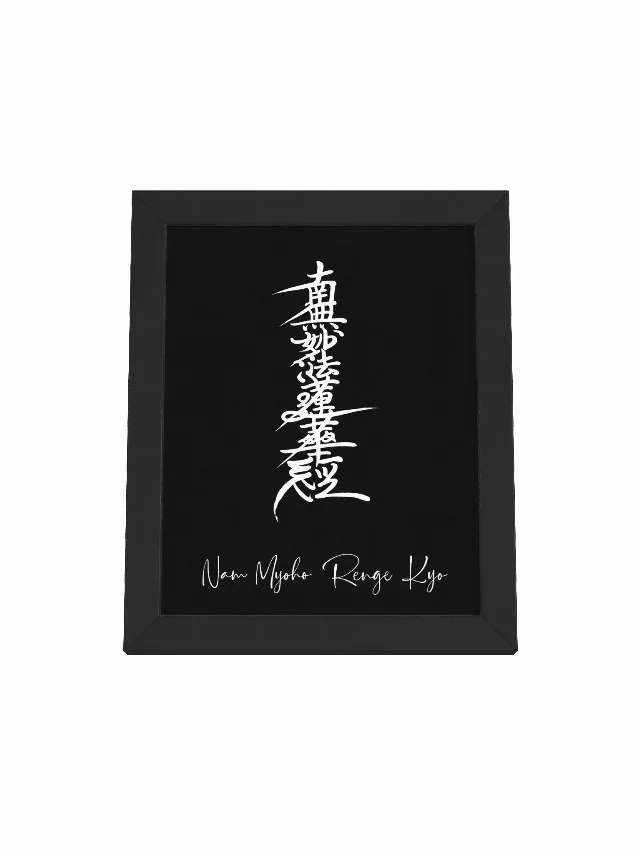
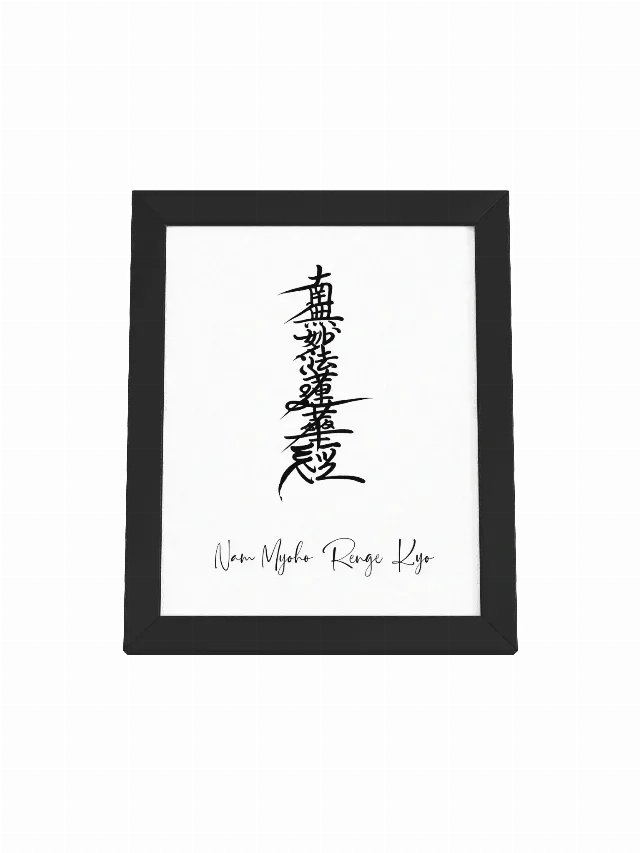
That space is not created by willpower alone. It is created by returning, again and again, to a practice that reminds you what you are. The daimoku, the chant of Nam Myoho Renge Kyo, is the return.
It helps to make the return specific. A morning chant before the first email. A short chant in the car before a difficult visit. A single phrase under your breath at the moment you notice the old reflex starting. The practice does not require a perfect setting. It requires a decision to turn towards it.
The gap between trigger and response
The gap is small at first. You may only notice it afterwards: "I could have said something different." That noticing is not failure. It is the beginning of awareness.
Over time the gap moves earlier. You notice the rise of anger before the words leave your mouth. You notice the pull of an old habit before you have opened the app. Nothing has been solved. Something has been seen.
This is why a daily practice matters more than an occasional dramatic effort. Five minutes in the morning will not fix a lifetime of reaction. It will, however, put a marker in the day. You start from a place that is slightly less automatic.
The same principle applies to good patterns. If you want to be more generous, practise generosity in small, repeatable ways. Karma is not only the thing that trips you. It is also the thing that carries you.
Karma is not blame
There is a cruel misuse of this teaching. It happens when someone tells a person in difficulty that their suffering is their karma. That is not a kindness, and it is not what the teaching is for.
Karma describes a pattern of causes and conditions, many of which are inherited, social and far beyond one person's control. A child does not choose the household they are born into. A worker does not choose a factory closing. To turn a wide, impersonal pattern into a verdict on an individual is to use a map as a weapon.
Family patterns are a good example. A temper that runs through three generations is not a moral failing in the youngest child. It is a set of learned responses, passed on by people who were themselves passed something they did not choose. The practice can interrupt the passing. It does not require anyone to be blamed for receiving it.
If you would not say it to someone in the first five minutes of meeting them, do not say it to them at all. Sit with them instead. Chant for them if you like. Let the teaching make you more careful, not more certain.
Changing direction, one cause at a time
The practice of changing karma is less dramatic than the word suggests. It looks like this.
First, name the pattern without excusing it. "I go cold when I feel overlooked." "I promise more than I can do." "I check my phone when I am afraid."
Second, chant. Not to make the pattern disappear, but to see it from a slightly different place. Five minutes is enough.
Third, choose one different cause today. Not a new personality. One action. Send the message you have been avoiding. Say the apology without a defence attached. Leave the phone in another room for an hour.
Fourth, repair what can be repaired. Karma is not only personal growth. It is also the practical work of putting things right with people you have hurt.
None of this comes with a timetable. Some patterns loosen in weeks. Some take years. Some never fully leave, and you learn to meet them with more skill and less shame.
There will also be days when you do the opposite of what you intended. You snap at the person you meant to listen to. You open the app you meant to leave alone. A relapse is not proof that the practice has failed. It is information about how strong the old groove is, and an invitation to begin again without a speech.
Try this today. Write down one pattern you would like to stop feeding. Then write one small action that would feed a different one. Do the small action before you go to bed, and chant for five minutes first if you can.
From Nichiren's writings. In On Attaining Buddhahood in This Lifetime, Nichiren says that the ten worlds and three thousand realms are contained in a single moment of an ordinary person's life. The practical consequence is that karma is not a closed file. The next cause is always being made now.
A gentle note. Chanting can sit alongside professional care, but it is not a substitute for it. If you are in crisis or need someone to talk to, please reach out to a local helpline through findahelpline.com.
Next step
Changing Poison Into Medicine takes the next question: what do you do when the pattern has already caused real harm?
For the wider map of cause and effect, read Can Karma Really Be Changed?.
And if the word itself is still fuzzy, How Does Nichiren Buddhism Understand Karma? gives a short, plain answer.
The most useful next cause is a small one. Set the chant timer for five minutes and begin there.