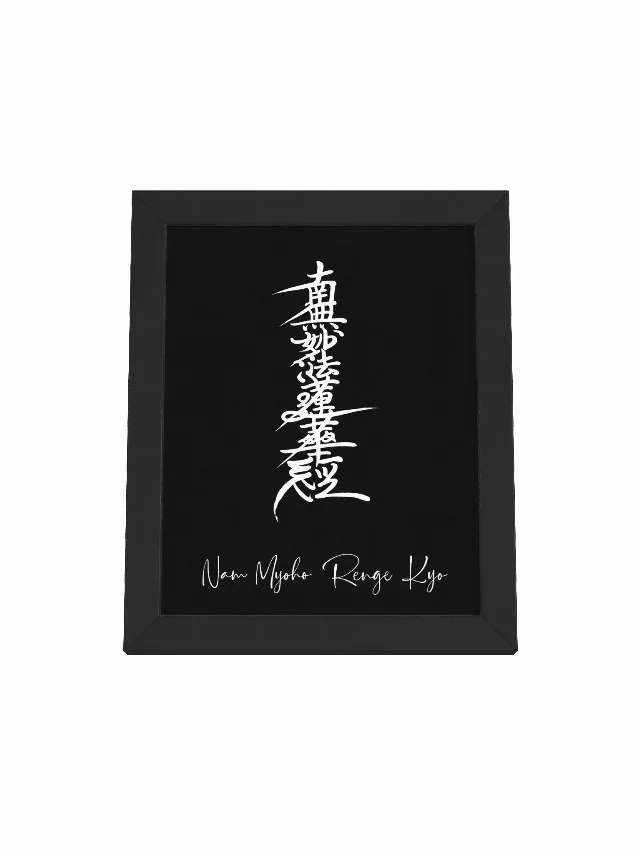
Nam Myoho Renge Kyo is the title of the Lotus Sutra, chanted as a daily practice. Nam expresses devotion. Myoho points to the mysterious law of life. Renge is the lotus flower. Kyo means sutra, or teaching. Chanting the title is called daimoku, and it is the central practice in Nichiren Buddhism.
What each word means
The chant is a Japanese reading of a Chinese title, so each part carries more than one layer.
Nam comes from a Sanskrit word for bowing, and turns the title into an act of devotion rather than a piece of information. Some people say namu, the fuller form.
Myoho joins myo, often translated as wonderful or mysterious, with ho, meaning law. It points to the way life works at a depth we cannot fully explain. It is not a law handed down by a god; it describes cause and effect inside life itself.
Renge means lotus flower. The lotus is a traditional Buddhist image because it opens and ripens its seed at the same time, a picture of cause and effect held in one moment.
Kyo means sutra, a teaching text, and here it means the Lotus Sutra, the writing Nichiren placed at the centre of his life.
Why chant a title rather than a prayer
The whole phrase means something close to devotion to the wonderful law of the Lotus Sutra.
Nichiren taught that the title holds the entire teaching in a form anyone can use. He also held that the world had entered the Latter Day of the Law, a traditional Buddhist idea of an age when the Buddha's teaching has been widely forgotten. In that setting, he argued, the title itself was the practice.
So chanting is not a request addressed to a god. It is closer to a statement of intent, repeated until it settles into the body. You are placing your attention on cause and effect, and on the possibility of waking up inside ordinary life.
What the words do over time
At first the chant is mostly sound. You are learning six syllables and trying to keep them steady. Meaning often arrives later, through experience rather than study.
Practitioners describe the phrase becoming a place to stand. Something goes wrong, and the words are there. You are nervous before an interview, and the rhythm gives your breathing something to follow. None of this is guaranteed, and none of it requires you to feel spiritual.
The words also carry a reminder that life is not fixed. That is part of why the lotus matters: the flower grows out of mud.
What the chant is not
It is not a magic formula that controls events, and it is not a translation exercise. You do not need perfect pronunciation or a clear mind. Nor is it a prayer that asks a deity to intervene. Think of it as a practice of attention, repeated often enough to shape how you meet the day.
Try this today. Say the chant aloud ten times slowly, then five times at a normal pace. Notice which syllable your mouth struggles with, and leave it at that for today.
From Nichiren's writings. In On Attaining Buddhahood in This Lifetime, Nichiren tells a follower that Buddhahood, the state of being fully awake, is not somewhere outside her. He points her back to her own mind and says that looking at it honestly is how she will find what she is seeking.
Next step
For the longer explanation, read Nam Myoho Renge Kyo Meaning. It takes each word apart and shows how the parts fit together.
To get the sound right, try How Do You Pronounce Nam Myoho Renge Kyo?, which breaks the syllables down one at a time.
Then sit down and chant for five minutes with the chant timer. You do not need to understand the words to begin.