Nichiren's writings treat death as a transition rather than an ending. Life and death are described as two phases of one continuous existence, like waking and sleeping. The exact details of what comes after are left open, and the emphasis falls on how you live now and how you meet the death of others.
Life and death as two phases
The traditional image is of a single life that moves between visible and invisible states. Birth is not the absolute beginning, and death is not the absolute end.
This is not quite the same as a soul travelling from body to body. Buddhist teaching generally denies a fixed, unchanging self. What continues is better described as a stream of causes and effects, a pattern of life that carries its momentum forward.
The Japanese term often used is shoji, birth and death. In Nichiren's writings, the cycle is not something to escape in a hurry. It is the way life expresses itself.
What is left open
The tradition offers no detailed map of the afterlife that everyone accepts, and Nichiren does not spend much time describing its geography.
There is no promise that you will meet a particular person again in a recognisable form. There is no timetable for what happens in the first days or weeks after death.
What the writings do insist on is continuity. Death is not annihilation, and it is not a final judgement. It is a change of state within a life that is larger than the body.
Chanting for someone who has died
Many practitioners chant for people who have died. They may do it at a funeral, on an anniversary, or simply when the person comes to mind.
The practice is not a way of buying a better destination for the deceased. It is a way of continuing the relationship, expressing love, and steadying yourself while you grieve. Some traditions keep a photograph or a small offering near the altar during this time.
Communities differ in the ceremonies they use. None of it is required for the person to be at peace.
Facing your own death
Nichiren's writings encourage a steady look at mortality rather than denial. Knowing that time is limited can clarify what matters.
Practically, that might mean making a will, saying things you have been avoiding, or repairing a relationship while there is still time. It might also mean practising now rather than assuming there will be a better season later.
The practice is a rehearsal for letting go. You sit, you chant, you stop. You come back the next day.
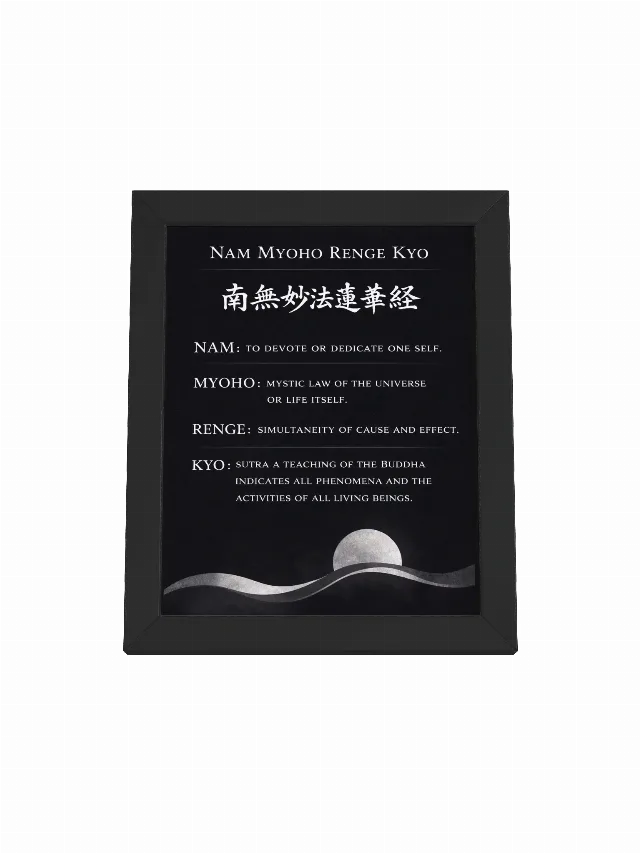
Try this today. Say the name of someone you have lost, out loud. Chant Nam Myoho Renge Kyo for five minutes, and let whatever comes up be there.
From Nichiren's writings. In The Heritage of the Ultimate Law of Life, Nichiren describes birth and death as two phases of the same life and urges his follower not to fear death. The letter places the continuity of life beyond the body without pretending to map it.
A gentle note. Chanting can sit alongside professional care, but it is not a substitute for it. If you are in crisis or need someone to talk to, please reach out to a local helpline through findahelpline.com.
Next step
Chanting Through Grief and Loss is for the weeks after a death. Chanting for Someone Else covers the practice of chanting on another person's behalf. The Heritage of the Ultimate Law of Life is the letter referred to above.
When you are ready, the chant timer can hold a quiet five minutes.