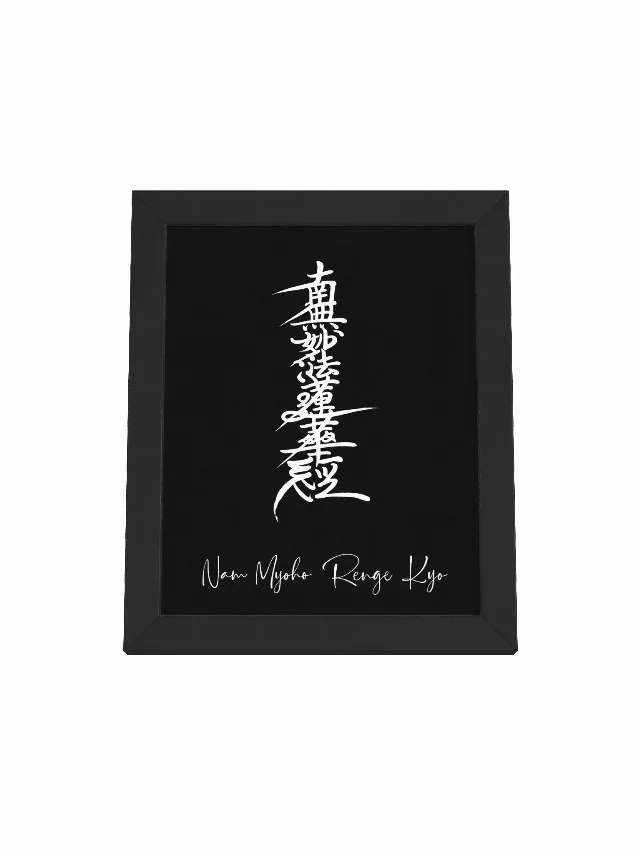
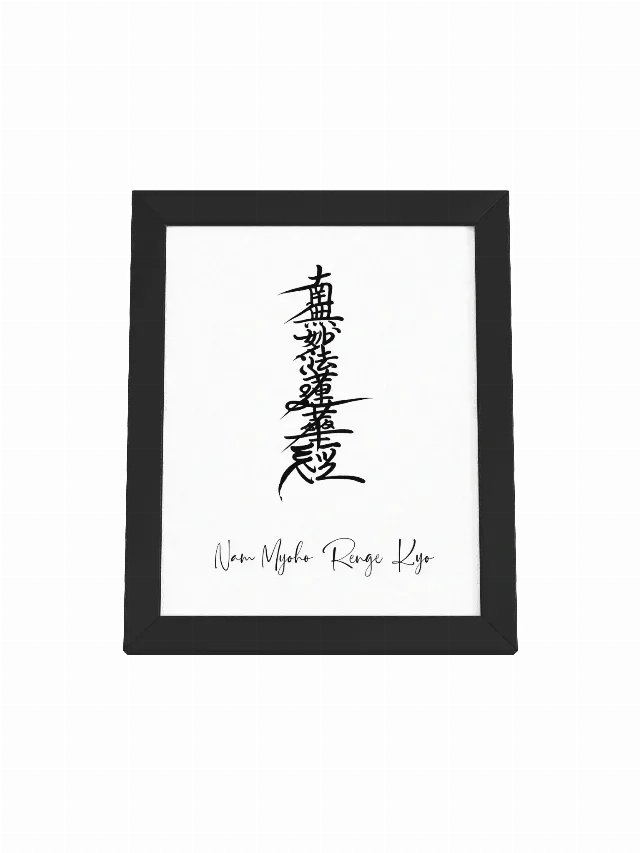
What to think while chanting is simpler than it sounds: you do not need to think about anything special. Let your attention rest on the sound of your voice and the words. If you want a focus, choose one simple thing: gratitude, a person you love, or a difficulty you are carrying. Then return to the sound.
The sound is enough to begin
The chant is a sound before it is an idea. You say Nam Myoho Renge Kyo and you hear it. That loop of voice and hearing is enough to hold your attention for five minutes.
If you have never chanted before, How to Chant Nam Myoho Renge Kyo walks through the basic form in plain words. You can read it once and then put it down.
Try not to analyse the chant while you are chanting it. You are not writing an essay about it. You are saying it and listening. When a thought arrives, let it pass and come back to the next syllable.
This is why chanting out loud can be easier than chanting silently at first. The ears have something to do.
Pace matters more than people expect. If you chant too fast, the words blur and the mind goes looking for entertainment. Slow down until you can hear the shape of each phrase. A steady pace, about the speed of a calm conversation, is usually enough.
You can also let your posture help. Sit upright enough to breathe freely. Let your shoulders drop. Keep your hands together or rest them on your lap. None of this is a ritual requirement, but a settled body gives the voice somewhere to stand.
What the words mean, in plain terms
It helps to know roughly what you are saying, even if the meaning is not the point of every session. Nam Myoho Renge Kyo is devotion to the Mystic Law of the Lotus Sutra.
Here is the phrase in pieces:
- Nam comes from a word meaning to bow or devote oneself. It is the act of turning towards the teaching with your whole life.
- Myoho means the wondrous or mystic law. It points to the truth that runs through all life, whether or not it can be explained.
- Renge means lotus flower. The lotus is a traditional image for cause and effect arising together, because it flowers and carries its seed at the same time.
- Kyo means sutra or teaching. It is the written teaching, and also the words you are saying aloud.
You do not have to hold all of that in your head while you chant. Knowing it can give the words a little more weight. Then you can put the explanation down and say the words again.
The chant is built on the title of the Lotus Sutra, which is why it can carry the whole teaching in a short phrase. Nichiren taught that saying the title with faith is a way of entering the sutra's wisdom, not a shortcut around it. You are not required to read every chapter first. You begin where you are, with the sound.
Three simple focuses you can use
If you want something to place at the centre of the session, choose one of these.
Gratitude. Bring to mind one ordinary thing you are glad of: a hot shower, a friend who texted, the fact that the heating came on. Hold it lightly while you chant. Do not turn it into a speech of thanks. Just let it sit there. If nothing comes, use the fact that you have five minutes to sit down.
A person. Say their name silently once before you begin. It might be a child, a parent, a friend who is struggling, or someone you have not spoken to in years. Chant with them in mind rather than about them. You are not directing their life. You are holding them in attention.
A difficulty. Name the situation in one sentence before you start. "The interview on Thursday." "The letter I have been avoiding." "The argument with my sister." Then chant. You are not solving it during the chant. You are giving it a place.
One focus is enough. Switching between five intentions in ten minutes is just another way to stay busy.
When a problem keeps pushing in
It will. The mind returns to the unfinished email, the unpaid bill, the conversation you wish had gone differently. That is not a failure of concentration. It is what minds do.
When you notice it, name it quietly. "Planning." "Worrying." "Remembering." Then say the next chant and let the thought be there without following it.
Sometimes the problem is not a distraction but the real reason you sat down. In that case, let it stay. Chant with the worry in the room. You do not have to push it away to practise.
You may find that the worry softens a little by the end. You may find it does not. Either way, you have not wasted the session. You have practised with the life you actually have.
After the session, write down one small action you can take. Send the email. Book the appointment. Ask for help. The chant does not replace the action, but it can make the action easier to face.
What not to do
You do not have to empty your mind. Trying to force a blank mind usually creates more noise.
You do not have to repeat affirmations. The chant is not a slogan to be repeated until you believe it. It is a practice of returning.
You do not have to visualise anything. Some people find a simple image helpful, such as light or a still pool. Others find images distracting. Both are fine.
You do not have to monitor yourself. Checking every thirty seconds to see whether you are focused is not focus. It is another interruption.
A short practice for a crowded mind
When your head is full, shorten the session. Three minutes is enough. Sit down, say the chant, and count ten of them slowly on your fingers. Then stop counting and say one more.
Afterwards, sit still for three breaths. Notice whether the room feels any different. It may not. That is allowed.
The point of the short version is not to achieve calm. It is to keep the appointment when a longer session would be too much. A crowded mind can still chant. It just needs a smaller room.
Try this today. Before you chant, name one thing you are grateful for out loud. Chant for five minutes with that one thing in mind. Afterwards, write a single word for how the session felt.
From Nichiren's writings. In On Attaining Buddhahood in This Lifetime, Nichiren teaches that Buddhahood is not somewhere outside ordinary life. It is found by looking into one's own mind. The letter does not ask for special thoughts or a perfect state. It asks the reader to see what is already there.
Next step
If your attention keeps sliding away, How to Focus When Your Mind Wanders offers practical fixes for the room, the body and the rhythm.
For a fuller explanation of the phrase itself, read Nam Myoho Renge Kyo Meaning.
If you finish a session and feel nothing, what to do when you feel nothing will reassure you.
Use the chant timer and give the sound five quiet minutes.