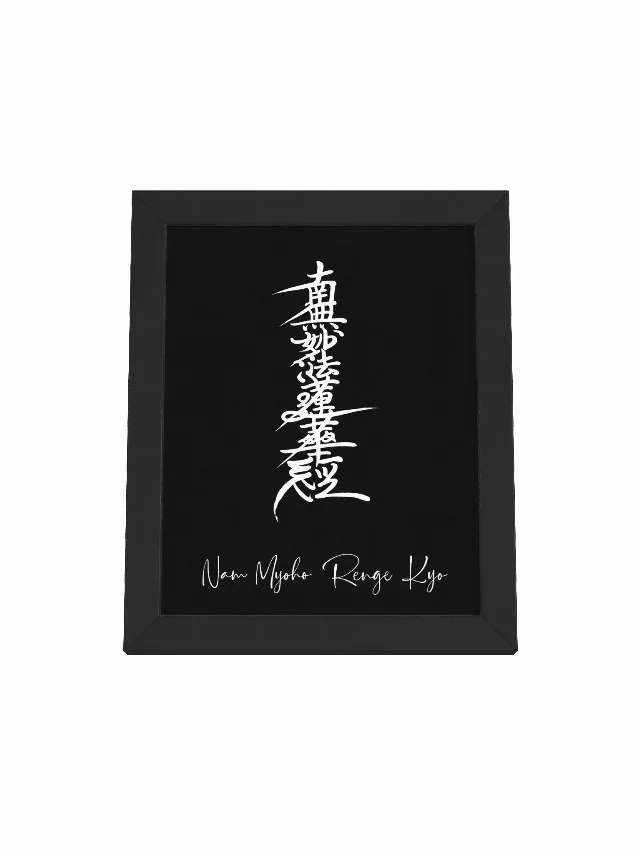
Most practitioners chant twice a day. Morning and evening chanting gives the day two quiet anchors: one to start, one to close. Each session can be short. A common shape is a longer morning session and a shorter one at night. The times are a rhythm, not a law.
Why two sessions?
Two sessions mark the edges of the day. The morning one sets a direction before work, school or caring duties take over. The evening one gives you a chance to put the day down before sleep.
There is nothing magical about dawn or dusk. You are not more likely to be heard at a particular hour. The value is in the repetition: the same words at the same hinge points, day after day.
It also helps that the practice is waiting for you when you get up and when you come home. A rhythm is easier to keep than a resolution.
What a morning session looks like
A morning session can be as simple as five minutes of daimoku, the chant Nam Myoho Renge Kyo. If you want to add gongyo, the recitation of Lotus Sutra passages, it usually comes first. If you have a butsudan, the small altar where many practitioners keep their focus, you might open it, offer water and light a candle. If you do not, a chair and a few quiet minutes are enough.
A fuller morning might look like this:
- Wake up and use the bathroom. Splash water on your face.
- Open the altar or sit down in your usual place.
- Offer a glass of water if you have one.
- Recite gongyo, if you know it, or chant daimoku.
- Sit still for one minute before you stand.
The whole thing might take ten minutes. If you know a full gongyo, it may take fifteen or twenty. If you are rushed, five minutes of daimoku is still a morning session.
The first few minutes are often the hardest. You may feel groggy, reluctant or annoyed that you set an alarm for this. Begin anyway. The reluctance usually loosens once the first few phrases are said.
The point is not to complete a checklist. It is to begin the day with something other than the phone.
What an evening session looks like
The evening session is often shorter. You are tired. The day has used up your attention. A few minutes of daimoku, or a short recitation, is enough.
Some people repeat the morning gongyo. Others prefer a quieter session: a candle, a few minutes of chanting, and a review of the day. You might name one thing that went well and one thing you want to do differently tomorrow.
The evening session is a good place to stop carrying the day. You say the words, you let the day be what it was, and you go to bed.
Imagine a day when a meeting went badly and you snapped at someone you love. The evening session is not a courtroom. You do not have to build a case for or against yourself. You chant, you notice what happened, and you decide what to do tomorrow. Then you sleep.
Do not turn the evening session into a performance review. You are not grading yourself. You are closing a door.
If you can only do one session
One session a day is a real practice. Many people keep a morning session and let the evening one go during busy seasons. Others prefer the evening, when the house is quiet.
Pick the one you are most likely to keep. For most people, that is the morning, before the day fills up. For night owls, the evening may be easier.
If you can only manage one, make it the same one most days. A stable single session is better than two sessions that happen twice a week.
You can also split a session in half. Five minutes before you leave and five minutes when you get home is a two-part practice. It still marks both ends of the day.
Fitting it around work, children and shift patterns
A fixed schedule is a lovely idea, but life is not fixed. Here are some ways people make the rhythm work.
Early shifts. Chant for five minutes before you leave, even if you have to stand in the kitchen. Put your clothes out the night before so the morning has fewer decisions.
Night shifts. Do your main session when you get home, before sleep. It becomes your evening, even if the sun is up. A shorter session before you leave for work can mark the other end.
Small children. Chant while they are asleep, or let them sit with you with a book. A child who sees you chant for five minutes is learning that quiet is part of the day. If they interrupt, start again. That is the practice too.
Shared homes. A soft voice or silent chanting works. You do not need to explain yourself to anyone, though a short sentence can prevent questions.
Long commutes. Chant silently on the train or bus. It is not the same as a full session at home, but it keeps the thread.
A house full of people. Use the bathroom, a parked car or a short walk around the block. A few minutes of quiet chanting in an unlikely place still counts.
The shape can change with the season. What matters is that the practice has a place in the day, not that the place never moves.
A missed morning does not cancel the evening. A missed evening does not cancel the next morning.
The quiet after the session
The minutes after chanting matter more than people expect. If you finish and immediately pick up your phone, the session ends in a scramble.
Try to sit still for one minute. Let the last word fade. Notice the room: the light, the sound of traffic, the fridge humming. Then stand up.
In the morning, this pause can set the tone for the next hour. In the evening, it can help you go to bed without carrying the day's noise with you.
You do not need to feel peaceful. You just need to give the session a clean ending.
If you have a busy household, the pause may be the only quiet minute you get. Guard it. It belongs to the practice as much as the chanting does.
Try this today. Put a glass of water and tomorrow's clothes out now. Then set a timer for five minutes and chant before you check your phone.
From Nichiren's writings. In Happiness in This World, Nichiren insists that the teaching is not only about what happens after death. It changes how a person meets this life, with its work, family and ordinary troubles. Morning and evening practice is one way of bringing that promise into the middle of the day.
Next step
For the recitation itself, Gongyo: What It Is and How to Do It is the place to start if you want to learn the form.
How to Build a Daily Practice That Lasts will help you keep the rhythm when the first enthusiasm fades.
If you are wondering when to chant, What is the best time of day to chant? gives a practical answer.
Set the chant timer for five minutes tomorrow morning and let that be the start.