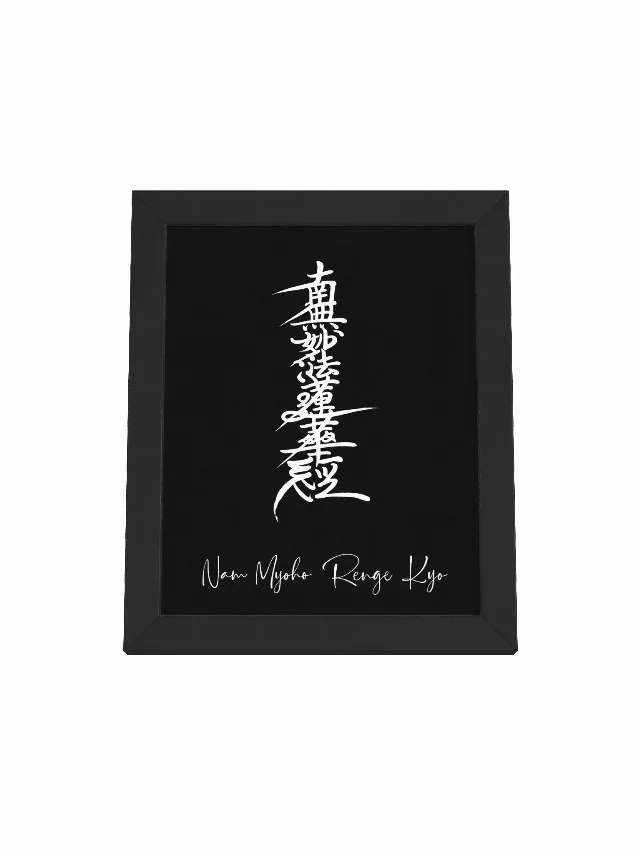
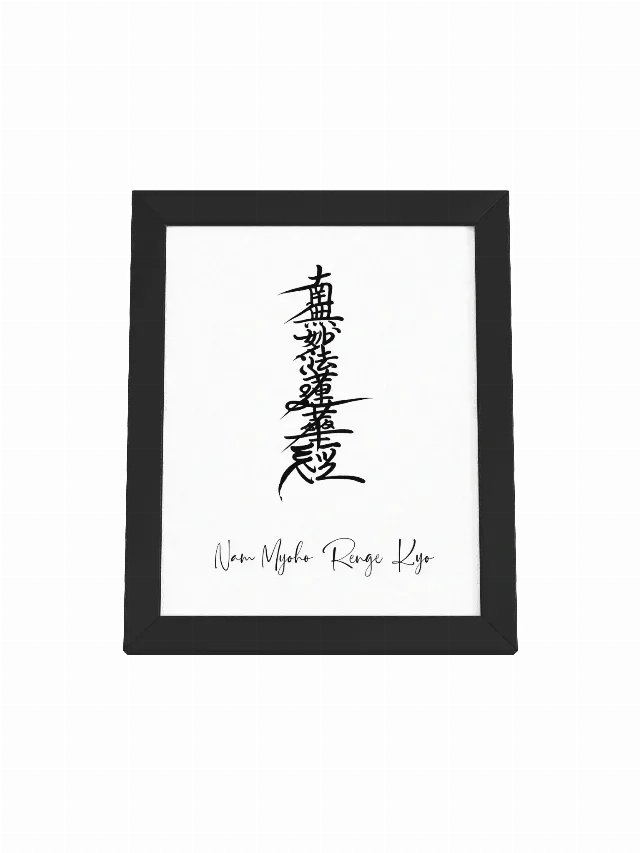
Yes. The gohonzon is a scroll that some practitioners keep in a home altar as a focus for chanting. It is an object of devotion, not a god, a talisman or a requirement. You can chant facing a wall, a window or a candle, and the practice is complete.
What the gohonzon is
Gohonzon is an honorific form of honzon, which means object of devotion. The "go" is a polite prefix, a little like saying "the honourable object" rather than just "the object".
Physically, it is usually a scroll inscribed with characters. Those characters represent the assembly described in the Lotus Sutra, where a vast gathering of beings honours the teaching. They also map the ten states of life, the moods and conditions a person moves through. Many people keep theirs in a butsudan, the small cabinet or altar used at home.
It is not a portrait of a god and not a lucky charm. It is a point on which to rest your eyes and your attention.
What it is for
A focus helps. When your eyes have somewhere to land, your mind is less likely to wander off in the first thirty seconds. The scroll also marks the practice as something you take seriously, in the same way that a clean desk can mark the start of work.
For many practitioners, it is a reminder of what they are doing. They are turning towards the possibility of waking up, and towards the Buddha nature in their own life and in the lives of others.
The scroll itself does not contain the power. The practice, the attention and the honesty are what matter. A person chanting in an empty room is not doing a lesser version.
Chanting before you have one
Choose a quiet corner, a chair by a window, or the end of a kitchen table. Face a wall if that helps you settle, or look out at the sky. Keep the space reasonably tidy, not because tidiness is holy, but because it makes beginning easier.
You do not need to improvise a scroll, print one out, or buy anything. If you want something to look at, a small candle or a single flower is enough.
Some people like to bow once before they sit and once after. Others do not. Neither is required.
If you want one later
Communities differ in how a gohonzon is received. Some offer one after a period of practice or study; others have a conversation first. Ask someone in a local community, and take your time.
When you do receive one, treat it with ordinary care: keep it clean, place it at eye level, and do not use it as decoration. If you are unsure how to care for it, ask. There is no shame in not knowing.
From Nichiren's writings. In The Real Aspect of the Gohonzon, Nichiren tells a follower not to look for the gohonzon outside her own life. He says it exists in ordinary people who embrace the teaching and chant, which is why faith matters more than the object itself.
Try this today. Choose a quiet corner and face a wall or a window. Chant for five minutes there. A clean shelf with a plant or a candle is enough, and nothing you do not yet have needs to hold you back.
Next step
The Gohonzon: What It Is and How to Relate to It covers the history and the symbolism in more depth.
Chanting Before You Have a Gohonzon is a practical guide to setting up a corner without waiting.
If you want to understand what the scroll represents, read What the Gohonzon Represents.
You can begin tonight with five minutes and no scroll at all: try the chant timer.