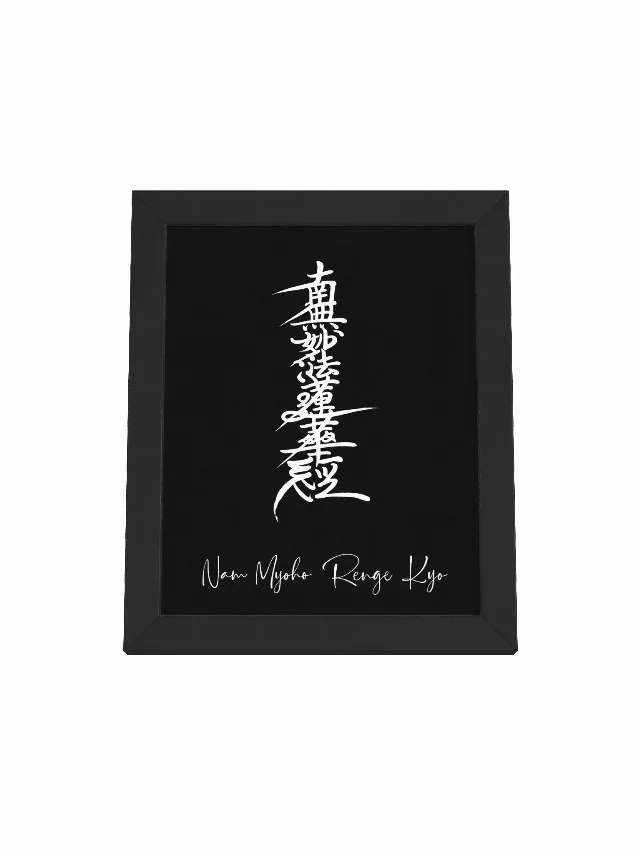
Grief does not need to be fixed before you can chant. You can sit down as you are, say Nam Myoho Renge Kyo slowly, and let the sadness be present. Chanting gives grief somewhere to go and a rhythm to lean on. It does not ask you to stop missing the person you lost.
Begin with the body, not the words
There is no single way to learn how to chant through grief. Start with something small. A chair, a cushion, a folded blanket. Put both feet on the floor. Let your shoulders drop.
Then say the words. Out loud is usually easier when grief is fresh, because the sound gives the chest somewhere to put its pressure. If your voice cracks, let it. Many practitioners describe crying while chanting, and no one treats that as a mistake.
Short sessions work better than long ones at first. Two minutes in the morning. Two minutes before bed. You can build later, when the days are less raw.
What to do with the person you miss
Some people say the name of the person they lost before they begin. Others picture a face, or place a photograph nearby. None of this is required. It is simply a way of bringing your whole life to the practice rather than a tidy part of it.
What you cannot do is chant someone else's grief for them, or use the practice to hurry your own along. Grief keeps its own calendar. A good day does not mean you are finished, and a collapse in a supermarket queue does not mean you have gone backwards.
If you want to chant for the person who died, Chanting for Someone Else has a simple way to hold them in mind. What happens after death is a separate question, and this answer on death and the afterlife treats it honestly, without pretending to know more than we do.
When grief needs more than a quiet room
Some losses arrive with trauma attached. Some grief becomes stuck for months, flattened into numbness or tangled with guilt. Chanting is not a treatment for that, and it is not a test of how much you loved someone.
If you are not sleeping, not eating, or unable to work, tell a doctor. If you are having thoughts of ending your life, tell someone today. That is not a failure of faith. It is the same common sense you would use for a broken bone.
From Nichiren's writings. In Winter Always Turns to Spring, Nichiren writes to a woman who has lost her husband. He does not tell her that the loss was small or that she should be cheerful. He treats winter as a season that always gives way, and he asks her not to let grief convince her that spring will never come.
Try this today. Light a candle if you have one. Say the name of the person you are missing out loud, then chant Nam Myoho Renge Kyo for five minutes. When you finish, sit for one more minute without doing anything.
A gentle note. Chanting can sit alongside professional care, but it is not a
substitute for it. If you are in crisis or need someone to talk to, please reach
out to a local helpline through findahelpline.com.
Next step
Chanting Through Grief and Loss is the longer guide, with suggestions for how to chant through grief on anniversaries and empty evenings. The Hard Times path is there for the weeks when even a short practice feels like too much, and What Is Gongyo? explains the short recitation some people add before daimoku.
If you only do one thing, use the chant timer for three minutes and let that be the whole practice today.