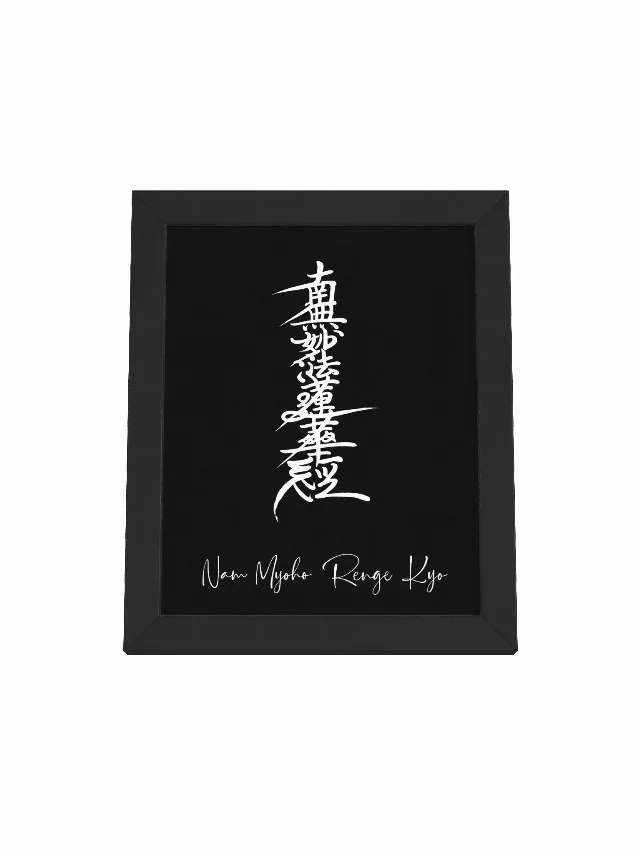
Nam Myoho Renge Kyo is chanted as six even syllables: Nam, myo, ho, ren, ge, kyo. Keep the vowel sounds short and even. Myo rhymes with "yo". Renge has a short e, as in "pen". Kyo sounds like "kyoh". There is no single correct accent, and a steady voice matters more than imitation.
The six syllables, one by one
Take them slowly. Nam has a broad a, close to the vowel in "father", but shorter. Myo is one syllable, with the y gliding into a long o. Ho is a short, open o. Ren has a short e, as in "pen". Ge starts with a hard g, as in "get". Kyo is one syllable, close to "kyoh".
Japanese syllables are fairly even in length. English speakers tend to lean on one syllable and swallow another. Aim for a row of level footsteps instead.
The usual slips are small. Myoho becomes three syllables, renge gets a soft g, or kyo splits into two. None of these makes the chant invalid, and many people correct themselves within a week of listening carefully.
Regional accents are not a problem. If you say "nahm" or "nam", the practice still works. What helps is consistency, so your mouth learns one shape rather than four.
Saying it as one line
When you chant, the words run together as Nam-myoho-renge-kyo. The gaps between them are small, and the whole line should feel like one movement rather than six separate words. Some people tap the rhythm with a finger or a string of juzu, the prayer beads used in this practice, which helps keep the line even.
If you are chanting with others, follow the group's pace rather than your own. After a few rounds the line becomes familiar, and the effort of counting drops away.
Finding a pace you can keep
Chanting has a natural pace, slower than conversation but not sluggish. Try one round at half speed, then one at the pace you would use to read a sentence aloud to a friend.
Breath matters more than speed. If you run out of air, you are going too fast. Let the chant follow your breath, not the other way round.
Some days the chant will be slow and heavy, and on others it will trip along. Both are fine. The pace is a container, not a measure of sincerity. If you notice yourself racing to finish, stop, take one breath, and begin the line again.
Do you need a teacher?
No. A recording or a friend can show you the shape, but nobody owns the pronunciation. Communities differ slightly in rhythm and emphasis, and that is normal. Pick a version that feels steady and stay with it for a few weeks.
If you learn from a video, you may pick up the speaker's accent along with the words, which is harmless. What matters is that the syllables stay clear enough for you to follow them.
Try this today. Say the six syllables once, then chant for two minutes at half your normal speaking speed. Record it on your phone and listen once, without judging.
From Nichiren's writings. In On Attaining Buddhahood in This Lifetime, Nichiren's concern is what the title of the sutra reveals about a person's own life. Meaning comes first in the letter, and a small slip in pronunciation does not undo it.
Next step
How to Chant Nam Myoho Renge Kyo shows the posture, the pace and the first week in detail.
If you are still unsure what the words mean, read What Does Nam Myoho Renge Kyo Mean? before you worry about accent.
Then try the chant timer for five minutes and let the sound settle on its own.