Give this first week of chanting one job: show up. Ten minutes a day is plenty. You do not need an altar, a scroll or perfect pronunciation. Each day below has one small focus, so that by day seven you have a shape you can keep rather than a performance to abandon.
Before day one: choose a time and a place
Pick a ten-minute window that already exists in your day. The five minutes after you make coffee. The ten minutes before you leave for work. The last part of the evening, once the dishes are done.
Then pick a place. A chair by the window, the end of the kitchen table, a cushion on the floor. It does not need to be quiet, only predictable. If you live with other people, tell them what you are doing. "I'm going to sit quietly for ten minutes" is usually enough.
Put your phone in another room or face down out of reach. Charge it across the room overnight if that helps.
You do not need to buy anything for this week. A kitchen chair is fine. So is the edge of the bed. If you already own prayer beads, you can hold them, but they are not required. The same goes for a candle, incense or a special cloth. Those things can come later, if they help you.
The simpler the setup, the easier it is to repeat on a morning when you are running late.
Day one and day two: just say the chant
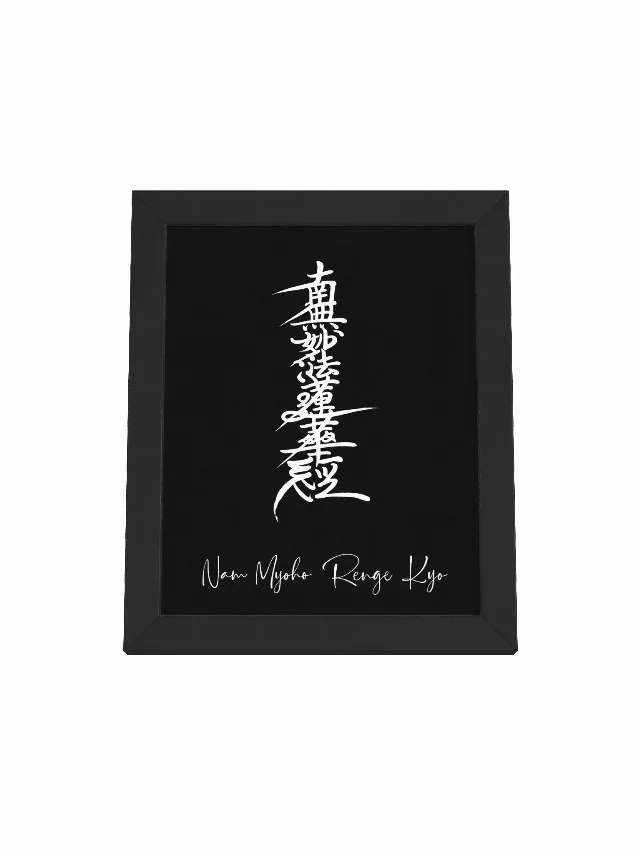
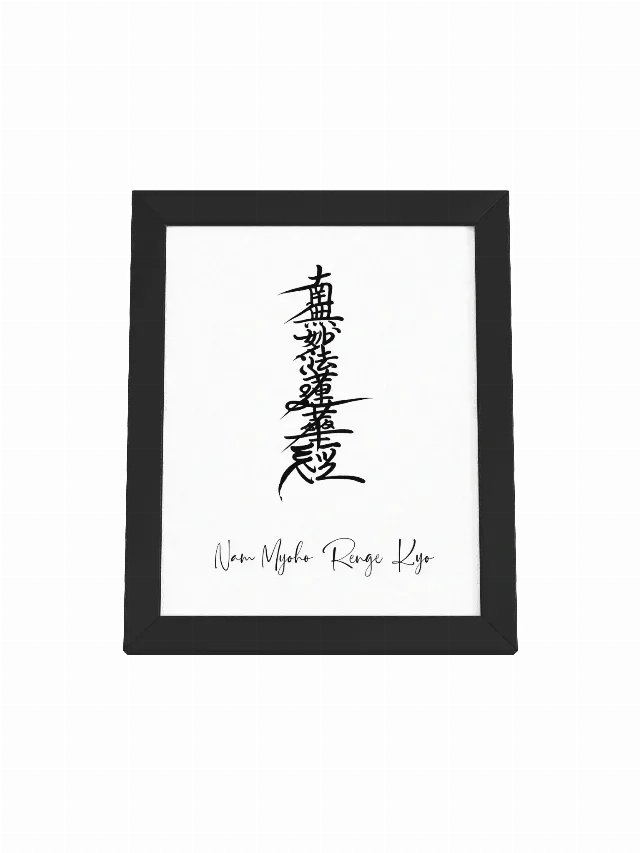
Sit down at your chosen time. Put your hands together, take one breath, and say Nam Myoho Renge Kyo out loud. Say it slowly enough that you can hear each syllable. Continue for five minutes, then sit still for a few seconds.
If you want the basic instructions before you begin, How to Chant Nam Myoho Renge Kyo shows you how to sit, breathe and start.
That is the whole session. No reading, no recitation, no special posture. You are learning the sound and the feel of sitting down to make it.
If five minutes feels long, do three. If your voice feels strained, drop to a quiet voice. If you cannot sit, stand. The point is to establish the appointment, not to perform it correctly.
You may notice that you do not know where to put your eyes. Try letting them rest on a patch of wall or floor in front of you. Half-closed is fine. Closing them is fine too, unless you are tired enough to drift off.
You may also notice that the chant feels strange in your mouth. That passes. By the second or third session, the rhythm starts to carry itself.
Day three and day four: add a pause and a notebook
Keep the same five minutes of chanting. Afterwards, stay in your seat for one minute of silence. Let the room be quiet. Notice your breathing without changing it.
Then write one line in a notebook. Not a journal entry. One line. "Tired but steadier." "Could not stop thinking about the email." "Nothing much." All three are useful.
The notebook is not a record of progress. It is a way to notice what the practice is like for you, without turning it into a score.
Some days the line will be dull. "Sat down. Chanted. Got up." That is a perfectly good entry. The notebook is doing its job if it helps you see that the practice continues even when it feels ordinary.
Day five and day six: try a short gongyo
If you have a copy of the recitation, add a few minutes of gongyo before your daimoku, the chant itself. Gongyo is the recitation of passages from the Lotus Sutra, and the full form can take fifteen to twenty minutes. In week one, do a short portion or simply follow along with a recording.
If you do not have a text, stay with daimoku. There is no penalty. Many people chant for months before they learn the recitation, and some never take to it. The chant is the heart of the practice.
Keep the session to ten or twelve minutes, even with the addition. You are testing a shape, not training for a marathon.
If you are following a recording, do not try to keep up with every syllable on the first attempt. Let your voice join where it can. The ear learns the shape of the recitation before the tongue does.
Day seven: review the week without grading it
Sit down for your session as usual. Afterwards, look back at your notebook lines. Ask yourself:
- Did I keep the appointment more often than not?
- Which time of day worked best?
- What got in the way, and was it avoidable?
Then choose a minimum for next week. It might be five minutes on busy days and ten on free ones. Write the minimum on the same page. A clear minimum is kinder than a vague intention to do more.
Do not grade the week as good or bad. A week with three sessions is data, not a verdict.
You might also notice one change you did not plan. Perhaps you were less rushed on the mornings you chanted. Perhaps you slept a little better. Notice it and leave it alone. Nothing needs to be proven from a single week.
If the week went well, resist the urge to double everything. Keep the same shape for another week. Consistency is built by repeating a size you can hold, not by escalating as soon as you feel good.
What to do when the week goes wrong
Something will probably go wrong. A late shift, a child home from school, a night of poor sleep, a friend who needs to talk. None of that means the plan failed.
If you miss a day, return the next day at the same time. Do not double the session to make up for it. Do not restart at day one. Just continue where you left off, even if that means the "week" takes nine days.
If you miss three days, make the next session very small. One chant before you take off your shoes. The aim is to keep the thread, not to prove that you can endure.
A first week is not a test of willpower. It is a chance to find out which version of the practice fits your actual life.
Keep the paper where you wrote your time and place. Next week you will not need a new plan. You will need the same one, repeated.
Try this today. Write tomorrow's time and place on a note: "7.10 a.m., kitchen chair." Put it by the kettle. Then sit in that chair for one minute, just to claim the spot.
From Nichiren's writings. In The Three Kinds of Treasure, Nichiren weighs the treasure of the heart above material wealth and the body's comforts. The letter treats ordinary, imperfect effort with respect. A small act done with care is not a lesser version of a large one. That is a good way to think about your first week.
Next step
If you want the wider path laid out, the New Practitioner Path shows what to learn after week one.
Morning and Evening Practice Explained helps you turn this experiment into a daily rhythm.
How to Build a Daily Practice That Lasts covers the weeks when motivation fades.
When you are ready, the newsletter sends one short note to keep you company.