Chanting for someone else means dedicating your daimoku to another person's happiness. You hold them in mind, say the words for them as well as for yourself, and then let go of the outcome. It is not a way to control them, and it does not require their permission, though it does require respect for their choices.
What dedication means
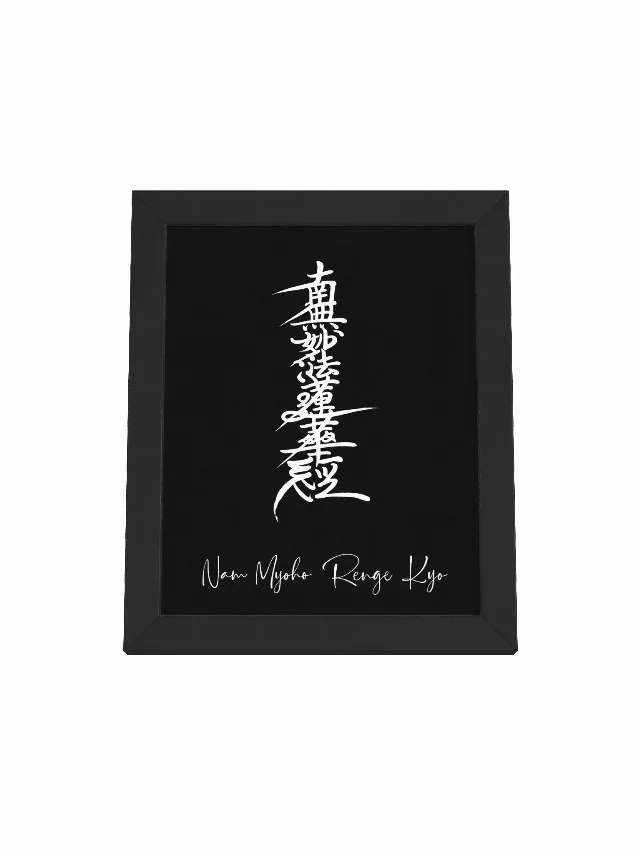
Daimoku is the practice of chanting Nam Myoho Renge Kyo. To dedicate it is to turn the practice towards someone beyond yourself.
This is not a transfer of energy. It is not a spell, and it does not give you power over another person's life. Think of it as a change in direction. For those minutes, you are not chanting only for your own concerns. You are holding someone else in the same light.
Many practitioners describe dedication as a way of widening the heart. Worry narrows attention to the thing you fear. Dedication makes room for the person themselves, not just the problem they are in.
It also changes what you are asking for. You are not asking the universe to obey your plan. You are asking to see the person clearly, to act well towards them, and to accept what you cannot control.
That is a modest thing. It is also difficult, which is why it is a practice.
How to do it
There is no special ritual required. You can do this in the same place and the same way you normally chant. If you are new, how to chant covers the words and posture; dedication asks for nothing more.
Before you begin, bring the person to mind. Say their name, silently or aloud. If you have a photograph, you can put it nearby. If you do not, a mental picture is enough.
Then chant. You do not need to repeat their name with every syllable. Hold them in the background of your attention and let the chant carry both of you.
When you finish, say one sentence. "May they be well." "May I be useful to them." "May I know what to do." Use your own words, even if they are clumsy.
Then put the practice down. Do not spend the rest of the day checking whether anything has changed. Dedication is not a transaction, and the result is not yours to measure.
You can dedicate a whole session or a few minutes at the end. You can do it daily, weekly, or when the person comes to mind. There is no minimum that makes it valid.
For someone who is ill
Illness is one of the most common reasons people start chanting for someone else. A parent, a friend, a child. The fear is immediate, and the wish to do something is strong.
Chanting can sit alongside medical care. It cannot replace it, and it should not delay it. If someone is ill, the most useful things are often unglamorous: helping them get to appointments, cooking a meal, making a phone call, sitting with them.
You can chant for their comfort, for the skill of the people caring for them, and for your own steadiness. You can chant for a good outcome without making that outcome a test of your faith.
Be careful with language. Do not tell a sick person that they will be cured because you chanted. Do not tell them that their illness is a spiritual problem. That adds a burden when they are already carrying enough.
The question on chanting for your health covers the personal side. If fear is keeping you awake, tell someone and get support. That is not a failure of practice.
For someone who has died
Many practitioners continue to dedicate daimoku to someone who has died. They say the person's name, chant, and treat the practice as a way of staying connected in memory.
This is not a claim about where the person has gone. The writings do not give a simple map of the afterlife, and it is better to be honest about that than to invent one. What the practice offers is a place for love that has nowhere else to go.
If you are grieving, the guide to chanting through grief is the fuller companion. The question on death and the afterlife sets out what the tradition does and does not say.
You can dedicate on anniversaries, birthdays or ordinary days. You can also stop for a while. Grief has its own weather, and the practice will wait for you.
For someone who hurt you
This is the hardest version of the practice. It is also the one where the limits matter most.
Chanting for someone who hurt you does not mean pretending that nothing happened. It does not mean forgiving them on demand. It does not mean staying in contact.
It means refusing to let the harm take up all the room in your life. You can chant for your own freedom from resentment, for the strength to keep a boundary, and for the person's welfare without excusing what they did.
The question on chanting for someone who hurt you goes into this with more care. The short version: forgiveness is not a switch, and it is not required for you to practise.
If the person is dangerous, keep your distance. Practice does not ask you to put yourself at risk in order to prove that you have let go.
When they do not change
You may chant for months and watch the person make the same choices. This is one of the most painful parts of dedication, because it exposes the limit of your power.
The practice does not promise that other people will change. What it offers is a way to change how you meet them. That may sound like a small consolation when you wanted a different outcome. It is not small. It is the difference between being ruled by someone else's behaviour and being able to respond to it.
Sometimes the change is in you: you stop accepting less, you start speaking plainly, you find a way to love someone without agreeing with them.
Sometimes the change is in the situation: a job ends, a house is sold, a child grows up. You did not cause it by chanting. You were simply more present for it.
And sometimes nothing changes for a long time. In that case, the practice is not a failure. It is a place to keep your heart from hardening while you wait.
Try this today. Write the name of one person on a slip of paper and put it where you chant. Say their name once, then chant for five minutes. Afterwards, put the paper away and do not check for a result.
From Nichiren's writings. In On Attaining Buddhahood in This Lifetime, Nichiren insists that the Law is not somewhere outside the practitioner. Chanting for another person is not a way of persuading an external power. It is a way of turning the same awakened life towards someone else.
A gentle note. Chanting can sit alongside professional care, but it is not a substitute for it. If you are in crisis or need someone to talk to, please reach out to a local helpline through findahelpline.com.
Next step
If the person you are chanting for is a family member in trouble, the question on chanting for a family member who is struggling is a practical next read. Chanting through grief is there if the person has died. And the question on chanting for someone who hurt you covers the hardest case with honesty.
The chant timer can hold the time while you hold the person in mind. Five minutes is enough to begin.