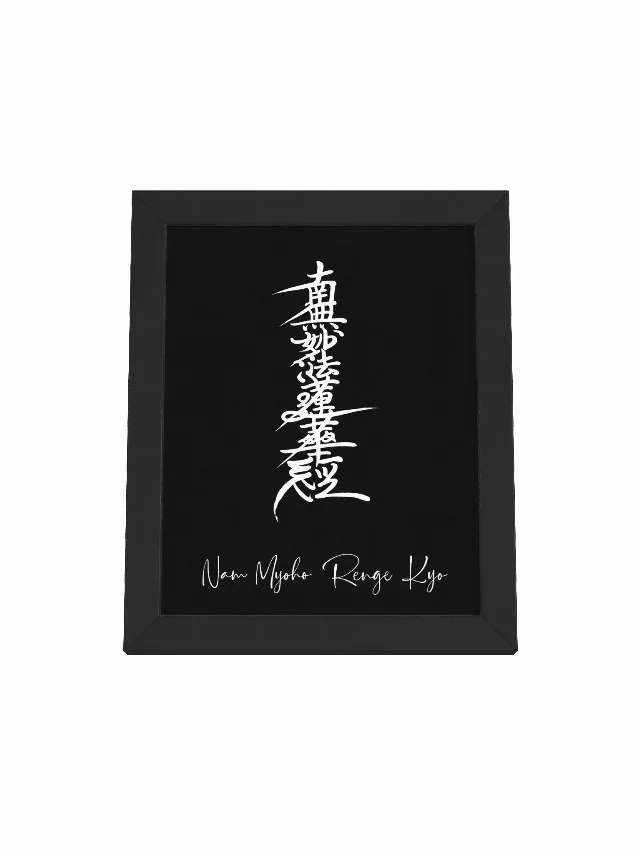
Yes, you can chant for a goal. Choose one clear aim, phrase it as something you are working towards, chant with it in mind, and then take one practical step. A goal gives the practice a direction, but the chant is not a magic order form. Hold the aim firmly and the outcome lightly.
Why a clear goal helps
A vague intention is hard to bring to a session. "I want to be happier" is understandable, but it gives your attention nothing to hold. "I want to find work that lets me spend more evenings at home" is specific enough to sit with.
A goal also reveals what you actually care about. Sitting down to chant with an aim in mind can show you that you have been avoiding a conversation, or that you want something you thought you were not allowed to want.
Take the example of someone who keeps chanting "I want more money" and finds, after a few weeks, that the real wish is to stop worrying at night. The money is part of it. The deeper aim is security. Either sentence can work, but the truer one gives the practice more weight.
None of this means the chant is a tool for controlling events. It means that a clear aim helps you bring your whole self to the practice.
How to phrase your goal
Write it in one sentence. Keep it in your own voice. Present tense or present continuous usually works better than a demand.
Here are some examples:
- "I am preparing well for the interview on Friday."
- "I am finding a way to live with this debt and make a plan."
- "I am learning to speak to my father without losing my temper."
- "I am finishing the first draft of this book."
Notice that each one describes your part. That is deliberate. You cannot chant someone else into loving you, hiring you or agreeing with you. You can chant for your own clarity, courage and steady effort.
Avoid phrases that treat the chant as a transaction. "I will chant until I get this" turns the practice into a bargain. A better shape is "I am bringing this aim into my practice and doing what I can."
Choose one goal for a season. If you write down five aims and chant at all of them, you are back to a vague intention with extra steps. Put the others in a drawer. They will still be there when this one has had its time.
What chanting for a goal is not
It is not a promise. The job may still go to someone else. The relationship may still end. The answer may not be the one you hoped for. Chanting can change how you meet a situation. It does not give you control over every outcome.
It is not a substitute for action. If you want work, you still send applications. If you want a steadier relationship, you still have the difficult conversation. If you want to sleep better, you still put the phone down earlier.
It is not positive thinking in disguise. You are not asked to pretend that everything is fine. You bring the real situation, including the fear and the anger, and you chant with it.
And it is not a performance. You do not have to feel confident while you chant. You only have to show up and say the words.
Bring the goal into the session
Write the goal on a small card. Put it where you can see it while you chant, or keep it in your notebook. You do not need to stare at it. A glance at the start is enough.
If you are new to the practice, How to Chant Nam Myoho Renge Kyo gives you the basic form before you add a goal to it.
Before you begin, read the sentence once. Then chant. Let the aim sit in the background. If your mind drifts to how you will achieve it, let that go and return to the sound.
After the session, sit still for a minute. Do not rush to the next thing. Notice what you feel: hope, impatience, sadness, nothing. All of it is information.
Some people like to place a symbol of the goal near their altar or chair: a train ticket for a trip, a photograph of the course they want to take. That is fine as long as the object does not become a superstition. It is a reminder, not a charm.
Take one step after chanting
A goal needs a path. After each session, choose one small action you can take within twenty-four hours. Not the whole plan. One step.
If the goal is work, the step might be updating one section of your CV or sending one email. If the goal is a calmer home, it might be a five-minute conversation before dinner. If the goal is study, it might be reading two pages.
Keep the step small enough that you will actually do it. A finished small step is worth more than an ambitious plan you abandon.
When the week ends, review what you did. Not whether the goal arrived. Whether you moved. Then choose the next step.
It also helps to tell one person what you are working towards. Not so they can hold you to it, but so the aim has a witness. A friend who asks "How did the application go?" can do more for your resolve than another hour of chanting.
When the goal changes
Goals change. You may discover that the job you wanted would have made you miserable. You may find that the relationship you were trying to save is not yours to save. You may achieve the aim and find it hollow.
That is not a failure of the practice. It is life giving you new information.
Review your goal once a month. Ask whether it is still yours, whether it is still honest, and whether it still deserves your attention. If it is not, write a new sentence. You can even thank the old goal before you let it go.
If the goal does not happen, give yourself time to be disappointed. Chanting does not ask you to skip that part. It asks you to keep going, with the disappointment in the room, until a new direction becomes clear.
Try this today. Write one goal in a single sentence. Put it beside your timer. Chant for five minutes with it in mind, then spend ten minutes on one step you can finish today. Cross the step off.
From Nichiren's writings. In The Strategy of the Lotus Sutra, Nichiren speaks to a follower facing a hostile situation and treats faith as a way of standing steady, not as a way of avoiding the fight. The letter joins trust in the teaching to practical resolve. Chanting for a goal belongs to that same pairing: the aim, the practice, and the next action.
Next step
If your goal is about work, Chanting for Your Career and Purpose goes further into the practical side.
For the question of whether it is acceptable to chant for money, a job or a partner, read Is it okay to chant for money, a job or a partner?.
How to Build a Daily Practice That Lasts shows how to keep going once the first burst of enthusiasm passes.
The newsletter sends a short note each week to keep your practice steady.