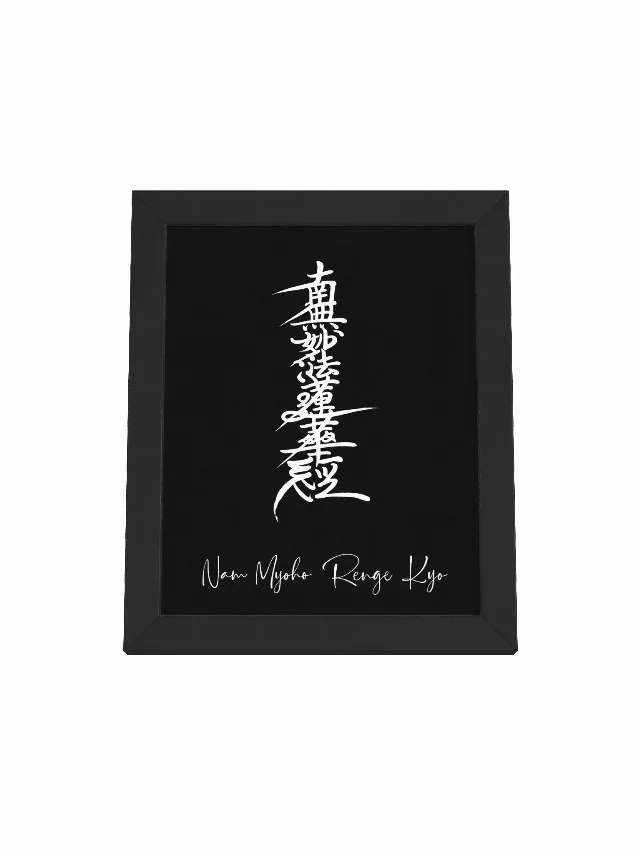
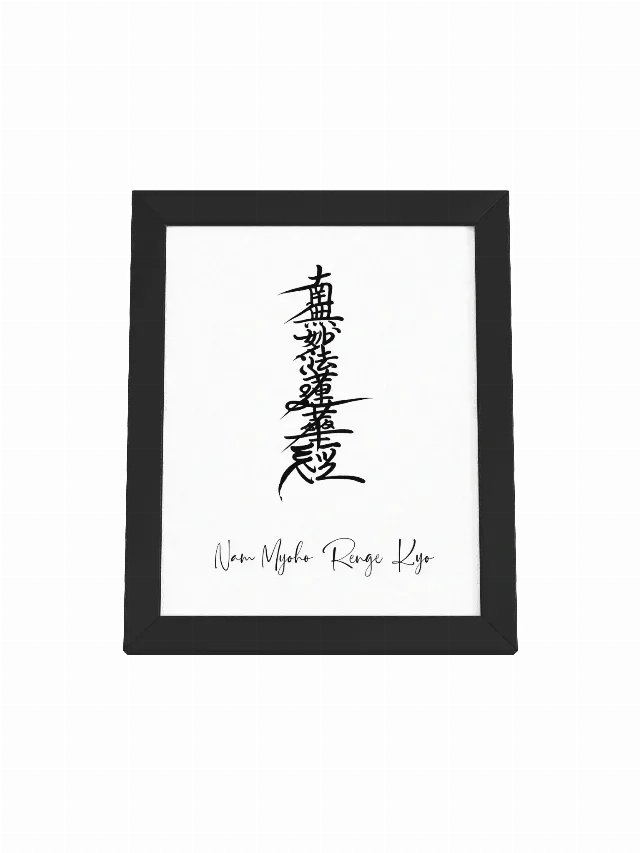
Both forms are used, and neither is wrong. Namu is the fuller Japanese rendering of a Sanskrit word meaning devotion or homage. Nam is a contraction that became common in chanting. Communities and individuals differ, and the meaning of the practice does not depend on which form you say.
The chant, Nam Myoho Renge Kyo, began as a Sanskrit phrase of devotion. It reached Japan through Chinese, and the transliteration came out as namu. That is why the fuller form sounds older: it is closer to the shape the word took when it arrived.
In ordinary Japanese speech, namu often shortens to nam, especially before certain sounds. The chant is no exception. Say the line a few times and you can hear why: namu-myoho runs into a cluster of syllables, while nam-myoho moves more easily.
So the two are not rivals. One is the word at full length, the other is the same word in working clothes.
Does the meaning change?
No. The sense of devotion, or turning towards, is the same in both. One form adds a syllable; it does not add a doctrine.
Some communities settle on one form and use it consistently in services and recordings. Individuals sometimes move between them without thinking about it. Neither choice makes the chant more or less valid, and neither is a sign of how long someone has practised.
If you have been told that one form is the real one, it is worth knowing that the difference is linguistic rather than spiritual. Nam and namu are two spellings of one act.
Which should you use?
Choose one for a session and stay with it. Switching mid-round can break the rhythm, especially when you are learning. If you chant with others, follow the room.
If you have been saying one form for years, there is no reason to change. If you are new, pick whichever feels easier in your mouth and revisit the question later. The choice is small, and it is yours.
There is also a practical point. A form you can say without tripping is a form you will actually use on a tired morning. That matters more than the extra syllable.
Attention, steadiness and honesty. The chant is a practice, not a password. A person saying namu distractedly is not doing something better than a person saying nam with care.
The words are a way of placing your attention on the law of cause and effect, and on the possibility of waking up inside ordinary life. That intention travels through either form.
You will see both spellings in books, sometimes hyphenated and sometimes run together. Publishers follow their own style, and none of these variations changes the sound enough to worry about.
Try this today. Chant one round with nam and one with namu. Notice which one lets you keep your breath steady. Keep that one for the rest of the week.
From Nichiren's writings. In The Object of Devotion for Observing the Mind, Nichiren is concerned with what the title of the Lotus Sutra means for a person's life. When communities differ on how to render a syllable, the letter points back to the meaning: devotion to the Law and to one's own life.
Next step
For the full meaning behind the phrase, read Nam Myoho Renge Kyo Meaning. It unpacks each word and how they fit together.
If you are still working out the sound, How Do You Pronounce Nam Myoho Renge Kyo? takes the syllables one at a time.
Then chant for five minutes with the chant timer. Either form will do.